
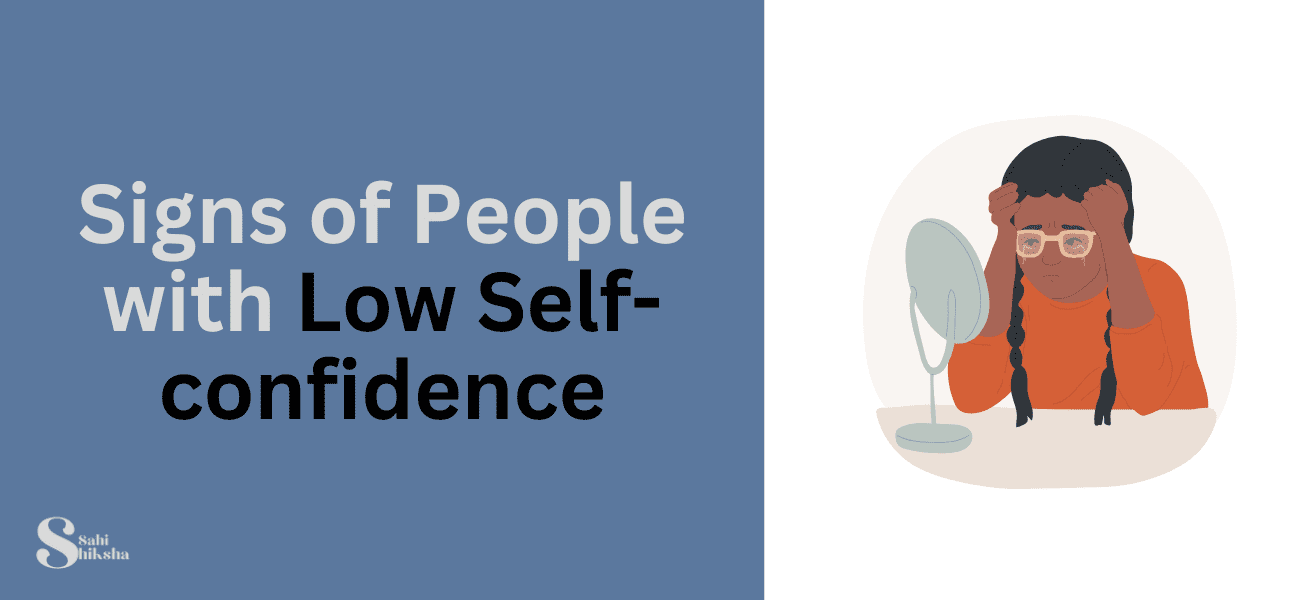
You may have noticed that some of your friends, colleagues, or family members struggle with low self-confidence. They want to achieve something in life, but a negative inner voice constantly holds them back. Low self-confidence eats away at us from within – it keeps us down, demotivates us, confuses us even when we take action, and prevents us from doing things freely. Ultimately, it stops us from achieving what we truly want.

The good news is that self-confidence can be developed at any stage in life through consistent practice. If you know someone struggling with it and genuinely wish to help them, you can. But how can you tell if someone is facing this issue? You might already have some idea, but here are some common signs people show when dealing with low self-confidence:
- Frequent changes in goals or plans: They often change their goals and plans because they don’t believe they can succeed. They keep switching ideas from time to time, unable to stay committed to one.
- Constant need for approval: They frequently seek validation from friends or colleagues before making decisions because they are unsure of themselves. Asking for feedback occasionally is fine, but doing it too often reflects confusion and self-doubt.
- Negative self-talk: They engage in self-criticism and express similar negativity around others. Self-doubt and harsh inner talk are common traits among people with low confidence.
- Fear of failure: They find it difficult to handle failure and tend to avoid taking risks, fearing they might fail. This fear often prevents them from pursuing opportunities and achieving success.
- Lack of clarity: When you ask them about something they’re working on, their answers are often vague or inconsistent, showing a lack of clear direction or belief in their path.
- Overconcern about others’ opinions: They worry excessively about what family, friends, or society will think if they fail. This constant fear of judgment limits their actions and personal growth.
- Impatience and self-doubt: They expect quick results, and when things don’t happen fast, they lose patience. They begin to doubt themselves, question their decisions, and panic — not realizing that meaningful results take time.