
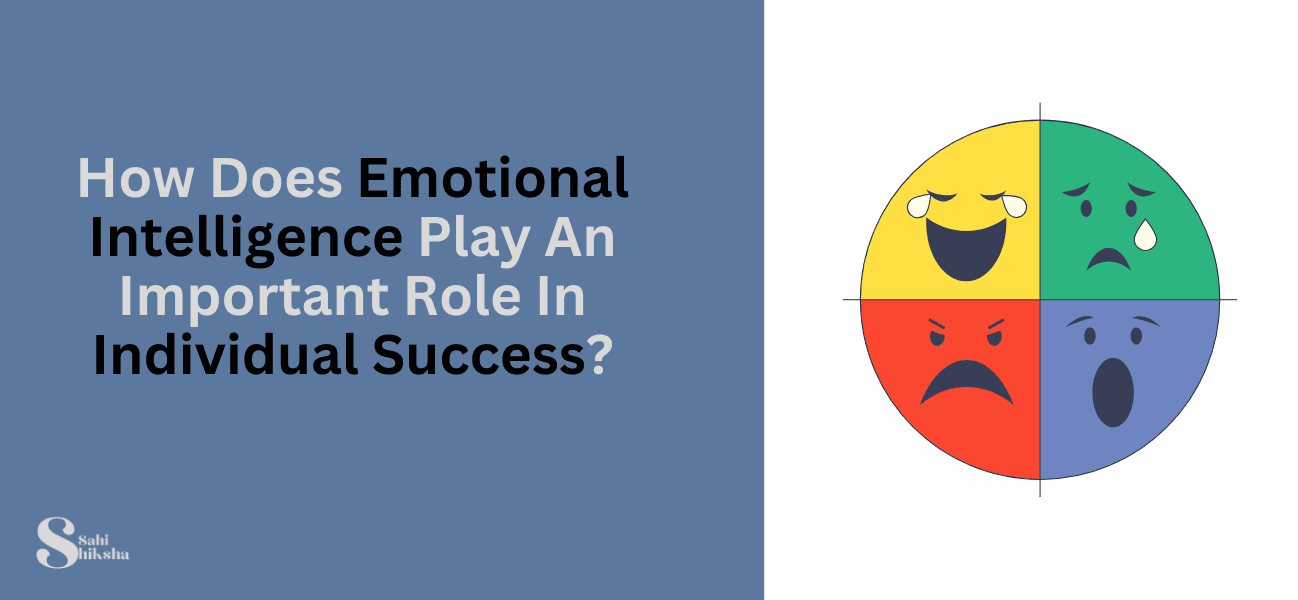
You may have heard of different types of intelligence such as IQ, EQ, SQ, CQ, AQ, and others. Among them, EQ is one of the most important for individual growth. EQ stands for Emotional Quotient.
As we grow up, we face numerous challenges in life, such as education, jobs, work pressure, criticism, loss, grief, maintaining relationships, and many others. Some people handle these challenges with ease, while others struggle. The difference lies in emotional intelligence. One person is emotionally intelligent, self-aware, and prepared for challenges, while the other is not.

An emotionally intelligent person understands life well, is aware of what life can throw at them, and prepares themselves in advance to handle problems effectively.
Let us understand emotional intelligence and its key components.
What Is Emotional Intelligence?
Emotional intelligence refers to the ability to understand and manage one’s own emotions, as well as the emotions of others. It consists of several components, including self-awareness, social awareness, empathy, self-control, motivation, and more.
Self-Awareness
Self-awareness means having a deep understanding of your mind, body, thoughts, feelings, behavior, and surroundings.
- You should know your strengths and weaknesses, interests, life goals, areas of improvement, and the skills you need to develop.
- In a workplace, you should understand how to behave with colleagues and seniors, how to conduct yourself professionally, and what improvements are needed to contribute to both personal and organizational success.
- You need to be aware of your nature, behavior, and attitude, as well as how others perceive you and how you should interact with them.
- You should recognize life’s challenges and understand what steps are required to handle them effectively.
Social Awareness
Social awareness is the ability to understand people’s emotions, behaviors, and social dynamics in everyday life.
- Understanding human psychology – what people like and dislike – helps you build stronger relationships with friends, colleagues, and others.
- Being aware of others’ emotions allows you to respond appropriately and empathetically, especially when someone is going through a difficult phase.
- In organizations, social awareness helps you work effectively in teams and understand workplace dynamics and politics.
- For those who manage clients or customers, it helps in building trust and winning long-term relationships.
Self-Control
Self-control is the ability to manage both positive and negative emotions.
As humans, we experience a wide range of emotions every day. When overly excited, we may say or promise things impulsively. When sad or angry, we may say or do things we later regret.
Without emotional control, we may make unconscious mistakes and sometimes pay a price that is difficult to recover from. Emotional control helps us respond thoughtfully rather than react impulsively.
Positive Mindset
Without a positive mindset, positive outcomes are difficult to achieve. Whether you are a business owner, leader, or employee, positivity is essential for success.
A positive mindset not only helps you grow personally but also motivates and uplifts the people around you, creating a healthier and more productive environment.
Empathy
Empathy is the ability to understand and share the feelings of others.
This quality helps you connect deeply with loved ones, friends, and colleagues, strengthening relationships and fostering trust and compassion.
Motivation
Motivation is the ability to inspire yourself, especially during challenging times.
Life often presents pressure-filled situations that can make us feel discouraged or broken. The ability to bounce back, stay focused, and keep moving forward helps us handle difficulties with resilience and confidence.
Key Takeaways
An emotionally intelligent individual can:
- Handle life’s challenges more effectively
- Manage relationships and stress better
- Stay happier and more fulfilled
- Achieve personal and professional success
- In a professional environment, emotionally intelligent individuals can manage workloads efficiently, lead and support team members effectively, spread positivity, and contribute to a productive and healthy workplace culture.